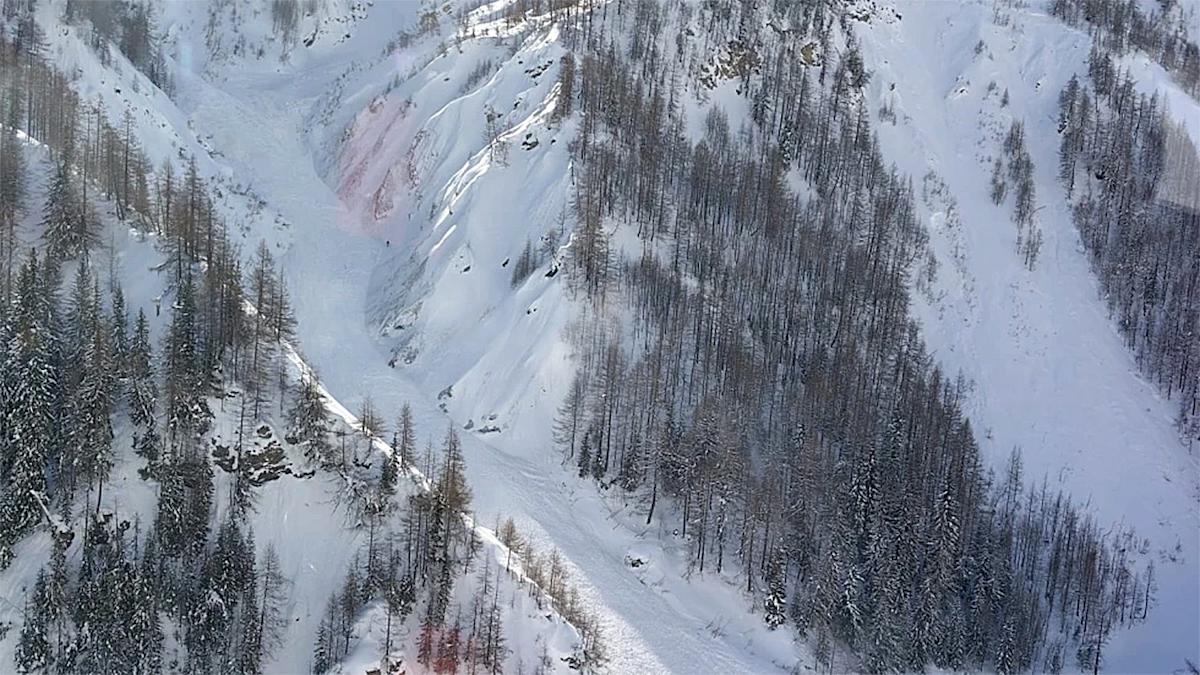
The Frustration of Searching for "accident mont blanc" in Local US Databases
In an age where information is seemingly at our fingertips, it's natural to assume that details about significant events, even those occurring halfway across the globe, would be readily available through a simple search. For those specifically looking for an "accident mont blanc" report, their initial search might lead them down a surprising and ultimately fruitless path: local US state and county accident databases. This article aims to clarify why these domestic reports fall drastically short when it comes to international incidents like those on Mont Blanc, and more importantly, to guide you toward the correct, authoritative sources for such critical information.
Imagine a scenario: a loved one is planning an ascent of Mont Blanc, or perhaps news of a major incident on the mountain has just broken, sparking concern. Your immediate instinct might be to search online, perhaps even navigating to a familiar government portal. You might even stumble upon state-level accident report archives, like those for South Carolina, Kansas City, MO, or Hillsborough County, FL. While these platforms are invaluable for their intended purpose – detailing local traffic collisions, workplace mishaps, or other incidents within their specific jurisdictions – they are fundamentally ill-equipped to provide any context or data regarding events unfolding thousands of miles away in the European Alps.
The disconnect is immediate and profound. These local databases are designed with a specific mandate: to document and analyze accidents that occur within their geographic boundaries, under their legal jurisdiction. They track everything from fender benders on Main Street to industrial accidents in state-regulated facilities. However, their scope simply does not extend beyond national borders, let alone across oceans to one of Europe’s most formidable peaks.
Understanding the Scope: What US State & County Accident Reports Actually Track
To truly grasp why US state and county reports are irrelevant for an "accident mont blanc" search, it's essential to understand their operational framework and legal purview. These systems are meticulously designed to serve local populations and authorities, reflecting the specific needs and laws of their respective states, counties, or municipalities.
- Geographic Limitations: Every US state and county accident reporting system operates strictly within its defined borders. For instance, accident reports from South Carolina meticulously detail incidents occurring on South Carolina roads, within its cities, and under the jurisdiction of its state patrol and local law enforcement. Similarly, Kansas City, MO, accident reports are confined to events within that city's limits, handled by its police department. Hillsborough County, FL, provides data for incidents for its county, including areas like Tampa and St. Petersburg. None of these databases possess the infrastructure, legal authority, or mandate to collect or publish information on events occurring in France or Italy.
- Jurisdictional Focus: These reports are generated by local police departments, state highway patrols, sheriff's offices, and other municipal or state agencies. Their primary goal is to aid in law enforcement investigations, insurance claims, public safety initiatives, and urban planning. The incidents they cover typically involve motor vehicles, local property damage, personal injuries stemming from domestic accidents, or other events requiring local emergency services and legal intervention within the US.
- Data Type and Purpose: The data collected is highly localized and specific: date, time, location (street names, intersections), parties involved (US residents, vehicles registered in the US), contributing factors (traffic violations, weather conditions in the US), and details relevant to US legal and insurance frameworks. This granular, domestically focused data is incompatible with, and irrelevant to, an incident like a mountaineering accident on Mont Blanc, which involves different laws, different reporting agencies, and a completely different set of environmental factors.
Therefore, while these platforms are vital resources for US citizens seeking information on local incidents, they are, by their very design, incapable of shedding any light on an "accident mont blanc". Searching these databases for such an event is akin to looking for an ocean liner in a swimming pool – the scale, context, and purpose are entirely mismatched. For a deeper dive into this specific challenge, consider reading What's Missing? Mont Blanc Accidents in Local US Reports.
Why Mont Blanc Accidents Are a World Apart: Jurisdiction and Reporting Challenges
Shifting our focus from local US reporting to the formidable Mont Blanc itself, we enter an entirely different world of accident reporting, jurisdiction, and complexity. Mont Blanc, towering majestically at 4,808 meters (15,774 feet), is not merely a mountain; it's an international landmark straddling the borders of France, Italy, and, by extension, close to Switzerland. This multinational reality profoundly impacts how incidents are managed and reported.
The Multifaceted Nature of Mont Blanc Accidents
An "accident mont blanc" can encompass a vast spectrum of incidents, each with unique challenges for rescue and reporting:
- Mountaineering and Climbing Accidents: Falls, rockfall, icefall, crevasse falls, avalanches, exposure, and exhaustion are tragically common. These often occur in remote, high-altitude, and extreme environments.
- Hiking and Trekking Incidents: While less technical than climbing, hikers can suffer falls, get lost, or succumb to rapidly changing weather conditions at lower altitudes or on popular trails like the Tour du Mont Blanc.
- Weather-Related Events: Sudden blizzards, whiteouts, lightning strikes, and extreme cold or heat can turn a routine ascent into a life-threatening situation.
- Glacier and Avalanche Incidents: The mountain's extensive glaciers are dynamic and pose significant risks, including serac collapses and sudden avalanches, burying climbers or destroying camps.
International Jurisdictions and Response Teams
When an "accident mont blanc" occurs, the response is a complex, multinational effort, not a local US police matter:
- French Authorities: On the French side (e.g., from Chamonix), the PGHM (Peloton de Gendarmerie de Haute Montagne) is the primary mountain rescue unit. They are part of the National Gendarmerie and are highly specialized.
- Italian Authorities: On the Italian side (e.g., from Courmayeur), the Corpo Nazionale Soccorso Alpino e Speleologico (CNSAS) often takes the lead, working with national police (Carabinieri) and financial guard (Guardia di Finanza) units that have mountain rescue capabilities.
- Coordination Challenges: Depending on the exact location of the incident (sometimes right on the border), both French and Italian teams might be involved, requiring intricate cross-border communication and cooperation.
- Reporting Landscape: Reports on these incidents are primarily generated by these European mountain rescue services, national police forces, and local prefectures or municipalities. They are often documented in French or Italian, sometimes summarized by European news agencies, and rarely, if ever, systematically compiled into English-language databases accessible via typical US state search queries.
The nature of these accidents and the agencies responding to them mean that the information flow is entirely distinct from what you'd find in a South Carolina traffic report. The sheer logistical and legal hurdles of collating such international, high-altitude incident data make it an entirely separate information ecosystem.
Where to Actually Find Information on Mont Blanc Accidents
Since US state reports are a dead end, where should you turn for reliable information on an "accident mont blanc"? The key is to broaden your search to international and specialized sources. Here's a guide to navigating this unique information landscape:
1. International News Outlets
For significant incidents with fatalities or multiple casualties, major international news organizations are often the first to report. They typically have correspondents or stringers in the region, or they rely on wire services and local European media. Start with:
- Wire Services: Associated Press (AP), Reuters, Agence France-Presse (AFP). These services disseminate news globally and are often picked up by other media.
- Major English-Language News: BBC News, CNN, The Guardian, The New York Times, The Washington Post. Search their archives using specific keywords like "Mont Blanc accident," "Chamonix rescue," or "Courmayeur climbing incident."
- European National News (Translated): Websites of major French newspapers (Le Monde, Le Figaro) and Italian newspapers (Corriere della Sera, La Repubblica) often have English sections or can be easily translated using browser tools.
2. Specialized Mountain Safety & Alpine Organizations
These organizations are often involved in compiling statistics, publishing safety advisories, and sometimes reporting on specific incidents, especially for educational purposes. They are a much more authoritative source for trends and detailed analyses than general news.
- UIAA (International Climbing and Mountaineering Federation): The UIAA often publishes safety reports and statistics related to mountaineering accidents globally.
- IFMGA (International Federation of Mountain Guides Associations): Guides are often at the forefront of incidents, and their associations may compile data or release statements.
- National Alpine Clubs: Organizations like the Club Alpin Français (CAF) in France, Club Alpino Italiano (CAI) in Italy, or the British Mountaineering Council (BMC) often track incidents involving their members or within their respective territories. Their publications or websites can be valuable resources.
- Local Mountain Rescue Services: Websites for the PGHM (France) or CNSAS (Italy) may issue press releases or periodic reports, though these are primarily in their native languages.
3. Government and Official Regional Sources
For official statements or detailed reports, you might need to look to the specific regional authorities in France or Italy. These sources are less about immediate news and more about formal documentation.
- Prefectures: In France, the local prefecture (e.g., Haute-Savoie, which includes Chamonix) might issue official communications regarding major incidents.
- Regional Governments: The regional government of Aosta Valley in Italy (where Courmayeur is located) might also provide information.
When searching, use very specific keywords. Instead of just "accident," try "climbing accident," "fatal incident," "rescue operation," or names of specific routes or features on Mont Blanc if known. Remember that an "accident mont blanc" may be reported with different terminology in European media compared to US reports. To further aid your search, you might find valuable strategies in Finding Mont Blanc Accident Data: Beyond Local US Sources.
Beyond the Search: Understanding Mont Blanc Safety and Risk
While searching for "accident mont blanc" data is often driven by a need for information about past events, it inherently points to a deeper concern: the inherent risks of ascending this magnificent peak. Understanding these risks is paramount for anyone considering the ascent, or for those supporting someone who is.
The Inherent Dangers of High-Altitude Mountaineering
Mont Blanc is not a hiking trail; it is a serious mountaineering objective. The dangers are numerous and often unforgiving:
- Altitude Sickness: Acute Mountain Sickness (AMS), High-Altitude Cerebral Edema (HACE), and High-Altitude Pulmonary Edema (HAPE) are real threats above 2,500-3,000 meters.
- Extreme Weather: Conditions can change dramatically and rapidly, even in summer. High winds, freezing temperatures, blizzards, and whiteouts are common.
- Glacier Travel: Crevasses (deep fissures in the ice), seracs (ice columns), and icefalls pose constant threats. Roped travel and crevasse rescue skills are essential.
- Rockfall and Icefall: Warm weather can destabilize rock and ice, leading to dangerous projectiles, particularly on popular routes like the Gouter Corridor.
- Exposure and Exhaustion: Long climbing days, especially at altitude, can lead to hypothermia, frostbite, and severe fatigue, increasing the risk of accidents.
- Objective Hazards: These are dangers inherent to the mountain itself, beyond a climber's control, such as avalanches, falling ice, or unpredictable weather shifts.
Practical Tips for Aspiring Mont Blanc Climbers
If your search for "accident mont blanc" information is connected to a personal interest in climbing, consider these vital safety measures:
- Acclimatization is Key: Spend several days at altitude (e.g., hiking in Chamonix valley or doing easier peaks) before attempting Mont Blanc.
- Hire a Certified Mountain Guide: For most individuals without extensive high-altitude mountaineering experience, a UIAGM/IFMGA certified guide is indispensable. They provide expertise, safety, and local knowledge.
- Proper Training and Fitness: Mont Blanc demands excellent physical fitness and prior experience with crampons, ice axes, and rope work.
- Appropriate Equipment: Ensure you have high-quality, cold-weather mountaineering gear, including boots, clothing layers, ice axe, crampons, helmet, harness, and a robust first-aid kit.
- Monitor Weather Religiously: Consult multiple, reliable mountain-specific forecasts daily. Be prepared to turn back if conditions deteriorate.
- Understand the Route: Research your chosen route thoroughly, understanding its challenges, objective hazards, and emergency bail-out options.
- Travel Insurance: Ensure your travel insurance explicitly covers high-altitude mountaineering, including helicopter rescue and medical repatriation.
The mountain's allure is undeniable, but it demands respect, thorough preparation, and a deep understanding of its risks. Information on past accidents can serve as a grim reminder of these realities, reinforcing the need for utmost caution.
Conclusion
Navigating the digital landscape for information on an "accident mont blanc" reveals a crucial distinction between local US accident reporting and the international complexities of high-altitude mountaineering. While US state and county reports are invaluable for domestic incidents within their specific jurisdictions, they simply do not, and cannot, contain information about events occurring thousands of miles away on Mont Blanc. Instead of fruitless searches through local databases, the path to accurate information lies in turning to international news agencies, specialized alpine organizations, and relevant European governmental bodies. Beyond the search for reports, understanding the inherent dangers of Mont Blanc and adhering to rigorous safety protocols are paramount for anyone contemplating an ascent. Informed searching leads to relevant data, and informed preparation leads to safer adventures.